Empowering
Global
Talent
MG Consulting Group




Key Takeaways
- AI readiness is a workforce capability issue, not a technology issue. Access to AI tools does not guarantee successful adoption or scalable impact if the underlying organisational capability is weak.
- Many AI initiatives in the UAE stall at the pilot stage due to readiness gaps. The challenge is rarely the technology itself, but the inability of teams, processes, and governance structures to support scale.
- Readiness must be assessed across multiple dimensions. Leadership alignment, skills development, culture, governance, and talent strategy all determine whether AI can be effectively embedded across the organisation.
- Sequencing matters as much as strategy. Organisations that build workforce readiness before investing heavily in AI tools consistently achieve better long-term outcomes than those that reverse the order.
The UAE is one of the most AI-advanced economies in the world.
Government entities report near-universal AI utilization, the country ranks among the top globally for AI capability, and the national strategy is firmly oriented toward becoming a global AI leader by 2031.
Yet inside many organizations operating in the UAE, a different reality is unfolding.
AI tools are being piloted. Budgets are being approved. Strategies are being announced. But execution is stalling.
Many organizations are discovering that AI readiness in the UAE is not chiefly about access to the technology. It is about workforce readiness.
They have platforms, but not the people to use them effectively.
They have ambition, but not the internal capability to scale it.
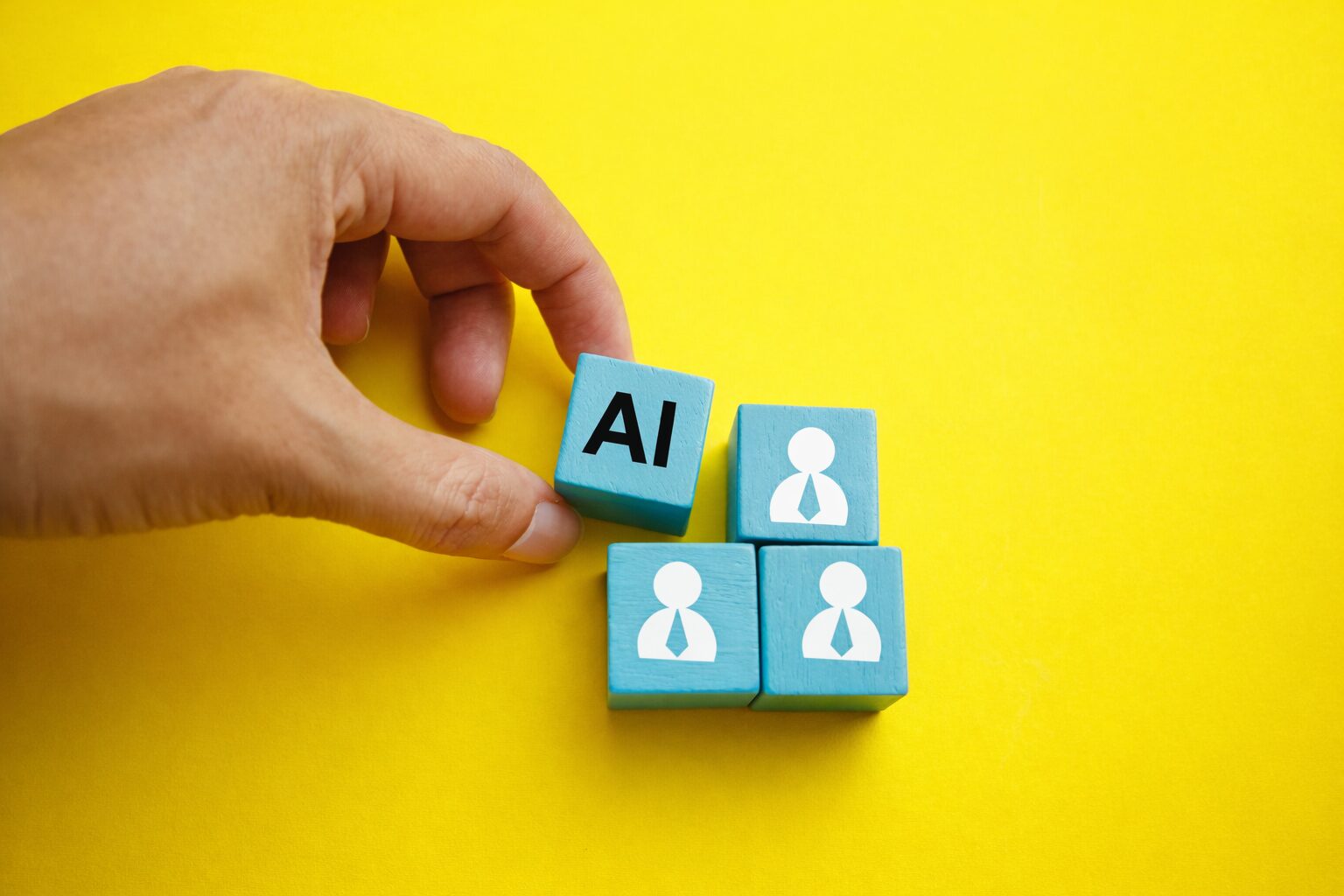
So, what is AI readiness?
AI readiness is an organization’s ability to adopt, integrate, and scale artificial intelligence effectively across its workforce, processes, and governance structures.
Unlike AI adoption—which refers to using AI tools—AI readiness determines whether those tools can deliver sustained, organization-wide impact.
A quick self-check
Before going further, consider this:
Your organization is not AI-ready if:
- There is no clearly accountable AI leader
- No workforce skills audit has been conducted
- AI governance or ethics guidelines are undefined
- There is no structured AI talent strategy
If even one of these is missing, AI initiatives are likely to stall at the pilot stage.
And this is where many AI strategies begin to break down.
The focus shifts too quickly to technology—before answering a more fundamental question:
Is the workforce actually ready to support, scale, and sustain AI adoption?
AI Readiness in the UAE and Why Companies Can't Afford to Get It Wrong
In boardroom conversations, AI readiness is sometimes framed as a technology issue.
In practice, it is an organizational capability problem—one that sits at the intersection of people, processes, and governance.
For UAE companies, getting this wrong would not be a minor inefficiency. It would be a strategic risk.
We explain the reasons below.
High ambition, uneven execution
The UAE is moving aggressively to position itself as a global AI leader through various initiatives and programs.
- National strategies targeting AI-driven economic transformation
- A national AI Readiness Index was launched in 2025
- AI education has been embedded into the K–12 system
- Rapid adoption across public sector entities
These together have created a unique pressure environment for private organizations. They are expected to move fast, even though their internal workforce capability development has struggled to keep pace.
The pace of national AI advancement is outpacing the AI readiness of many private-sector workforces in the UAE.
AI readiness vs. AI adoption
This is where most organizations misstep.
- AI adoption = implementing tools and running pilots
- AI readiness = having the workforce and systems to scale those initiatives
UAE companies adopting AI without readiness risk exposing themselves to problems such as:
- Fragmented use cases
- Pilot-stage stagnation
- Low return on AI investment
Misdiagnosing AI readiness leads to misallocated budgets, stalled initiatives, and leadership misalignment.
Why the cost of getting it wrong is high
In the UAE context, the impact is amplified by:
- Scarcity of experienced AI talent
- Increasing regulatory and governance expectations
- Competitive pressure to demonstrate AI progress
- Rapid pace of technological change
The result is a recurring pattern: Investment in AI technology is outpacing investment in workforce capabilities.
And when that happens, execution becomes the bottleneck.
AI readiness is not determined by the tools an organization adopts, but by the workforce capability it builds to use them.
For leaders trying to better align workforce capability with technology decisions, read our article on HR Tech Stack 2026: How GCC HR Leaders Should Evaluate, Build, and Future-Proof Theirs.
The MGCG AI Readiness Matrix: 5 Pillars for People-First AI Transformation
To address this gap, we developed the MGCG AI Readiness Matrix, a structured framework for assessing whether an organization is truly prepared to implement and scale AI.
Rather than focusing on technology selection, the Matrix answers a more fundamental question:
Can your organization actually execute on its AI ambitions?
How the Matrix works
Each pillar is assessed and scored:
- Each pillar: 0–20 points
- Total score: 0–100
Readiness Levels:
- 0–40 → Not AI-ready
- 41–70 → Partially ready
- 71–100 → Ready to scale
The 5 Pillars of AI Readiness
1. Workforce Strategy & Leadership
What it assesses: Leadership ownership and strategic alignment.
| Readiness Level | Indicators |
|---|---|
| Low | AI discussed, no accountable owner |
| Medium | Awareness exists, but no workforce roadmap |
| High | Dedicated AI leadership with aligned strategy and budget |
Why it matters: Without ownership, AI remains fragmented.
2. Skills Architecture & Upskilling
What it assesses: Visibility and development of workforce capability.
| Readiness Level | Indicators |
|---|---|
| Low | No visibility into skills or gaps |
| Medium | Ad hoc training initiatives |
| High | Structured learning pathways with measurable outcomes |
Why it matters: AI cannot scale without matching capability to use cases.
3. Change Management & Culture
What it assesses: Organizational readiness for transformation.
| Readiness Level | Indicators |
|---|---|
| Low | Resistance, lack of communication |
| Medium | Awareness without engagement |
| High | Structured change management with employee buy-in |
Why it matters: Culture determines adoption—not tools.
For more insight, you can read our article on Why Managing Hybrid Teams is the Middle East’s Competitive Edge in 2026, which explores how organizational design influences performance and adaptability.
4. Governance, Ethics & Compliance
What it assesses: Responsible AI deployment within UAE regulations.
| Readiness Level | Indicators |
|---|---|
| Low | No governance or ethical framework |
| Medium | Partial policies without enforcement |
| High | Formal governance aligned with regulatory requirements |
Why it matters: Culture determines adoption—not tools.
5. Talent Acquisition & Pipeline
What it assesses: Ability to build and sustain AI capability.
| Readiness Level | Indicators |
|---|---|
| Low | Reactive hiring |
| Medium | Some hiring without long-term plan |
| High | Integrated strategy balancing local and global talent |
Why it matters: AI capability depends on talent continuity.
From assessment to action
Once assessed, the next step is clarity:
- 0–40: Build foundational capability before investing further in AI
- 41–70: Prioritize key gaps and execute targeted readiness initiatives
- 71–100: Scale AI initiatives and strengthen talent pipelines
For organizations where internal alignment is difficult, structured assessments are sometimes facilitated by independent HR consulting firms in the Middle East.
These partners can provide objective workforce diagnostics and coordinate cross-functional input, particularly in complex organizations where internal bias or fragmentation makes self-assessment unreliable.
The Mistake Most UAE CHROs Make: Technology Before Talent
As we explained earlier, most AI strategies do not fail because of poor tools.
They fail because of sequencing. Organizations invest in AI platforms before assessing whether their workforce is ready to use them.
The typical pattern looks like this:
- AI becomes a strategic priority
- Tools are selected and deployed
- Pilot projects show early promise
- Scaling requires workforce capability
- Gaps emerge—and progress slows
A better sequence
Organizations that succeed follow a different order:
- Assess workforce readiness
- Identify capability gaps
- Build or acquire talent
- Establish governance
- Then deploy technology
Skipping these steps increases cost, delays execution, and reduces impact.
Avoiding the trap
Avoiding this mistake requires:
- Honest internal assessment
- Alignment between HR and leadership
- Clear prioritization of capability over tools
In some cases, organizations bring in external advisors to validate readiness before making large AI investments—particularly where internal bias or complexity makes objective assessment difficult.
Most AI initiatives fail not because of the technology, but because organizations skip the readiness phase.
Building Your AI Talent Pipeline: Emiratization and Global Expertise

Once readiness gaps are identified, the next question becomes practical:
How do you build the capability required to close them?
In the UAE, this is shaped by a unique combination of national policy and global competition.
Organizations here must balance:
- Emiratization requirements
- Scarcity of experienced AI talent
- And the need for immediate capability and long-term development
This is why most effective UAE companies integrate multiple approaches:
- Leadership hiring to define AI direction
- Core team development for long-term capability
- Specialist talent for project execution
- Upskilling programs for the existing workforce
In practice, many organizations partner with executive search firms in the Middle East when hiring AI leadership roles that require both technical depth and strategic oversight.
At the same time, working with contract staffing agencies can help organizations access specialized AI talent on a project basis, particularly during pilot and early scaling phases where flexibility is critical.
For more insight into how leadership hiring works in the region, you can read Executive Recruitment Strategies for Startups in the Middle East.
Conclusion
AI transformation in the UAE is accelerating.
But the organizations that will succeed are not those that adopt AI the fastest.
They are the ones who build the capability to sustain it.
AI readiness is not a one-time assessment—it is an ongoing process of workforce development, governance alignment, and strategic talent planning.
The MGCG AI Readiness Matrix provides a structured way to evaluate where your organization stands and what needs to happen next.
Before investing further in AI technology, your priority must be to make sure your workforce is ready. In the end, it is not AI that transforms organizations. People do.
FAQs
1. What is AI readiness?
AI readiness determines whether your organization can scale AI effectively—not just use it. It reflects your workforce capability, governance, and processes. Without readiness, AI initiatives remain limited to pilots.
2. How is AI readiness measured?
It is measured across five pillars: leadership, skills, culture, governance, and talent. The MGCG AI Readiness Matrix scores each area to determine whether your organization is ready to scale AI.
3. What is the UAE AI Readiness Index?
It is a government initiative launched in 2025 to assess national AI preparedness. It focuses mainly on public sector capability and serves as a benchmark—not a full enterprise assessment.
4. How do I assess my company’s AI readiness?
Start with a structured framework like the MGCG Matrix. Evaluate leadership, skills, governance, and talent strategy. If gaps are unclear, external assessment can provide objective insight.
5. What are the challenges of AI adoption in UAE?
The main challenges are workforce skills gaps, competition for AI talent, regulatory complexity, and mis-sequencing—investing in technology before building capability.
6. Which industries are most AI-ready in UAE?
Financial services and healthcare lead due to stronger governance frameworks. Retail, logistics, and manufacturing are progressing, but many remain at the pilot stage.