Empowering
Global
Talent
MG Consulting Group




Key Takeaways
- AI upskilling helps an employee perform a role that still exists, usually by improving tool fluency, data use, judgment, and AI-assisted execution.
- AI reskilling prepares an employee to move into a different or significantly redesigned role when the old role is shrinking, being automated, or losing value.
- The decision should begin with the role, not with a training programme. If the role is still sound, upskilling may be enough. If the role is breaking apart, reskilling is the more honest workforce response.
- For GCC organisations, this decision also has a regional layer: national capability building, Saudization and Emiratization goals, mixed national and expatriate workforces, and fast-moving AI adoption.
- The mistake is not choosing upskilling or reskilling. The mistake is assuming both mean the same thing.
Most organisations respond to the ongoing wave of AI disruption by rolling out new training programs for their staff.
It feels fair. It feels visible. It gives leaders something to point to when employees ask what the company is doing about AI.
But training everyone in the same way is not a workforce strategy.
The main question behind AI upskilling vs reskilling is not whether employees need new skills. They do.
The main question is whether the role they currently occupy will still exist in a meaningful form once AI becomes part of the workflow.
If you are deciding right now what your GCC workforce needs for AI skills readiness, we would show you in this article where you need to start.
AI Upskilling vs Reskilling: The Difference That Matters
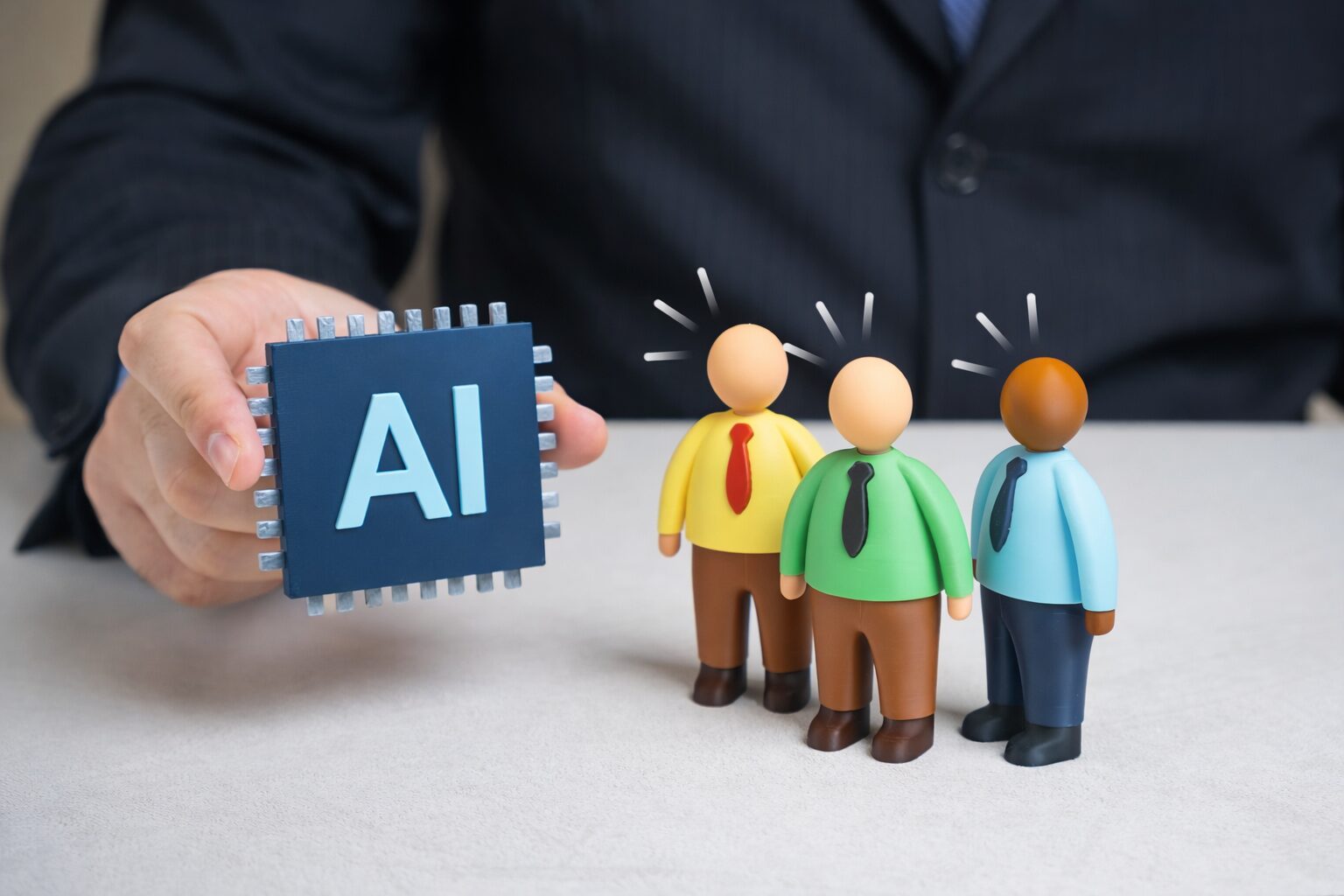
AI upskilling is the right choice when the employee’s current role remains relevant but the way the work is done has changed.
The tasks are still needed. The role still has value. The employee still belongs in that role family. What changes is the level of AI fluency, data awareness, workflow judgment, or tool-assisted decision-making required to perform the job well.
On the other hand, AI reskilling is different.
It is needed when AI has changed the role so significantly that the employee must move into a new role, a redesigned role, or a different career pathway inside the organisation.
For example, a finance analyst who learns to use AI tools for variance analysis and forecasting support may need upskilling. The role still exists but the tools have changed.
Meanwhile, a reporting coordinator whose weekly report production is now automated may need reskilling. The old task base has weakened. But if that employee understands operational patterns and stakeholder needs, they can move into business insights support, workflow quality control, or process improvement.
That is the difference.
While upskilling invests in a current role, reskilling invests in the person’s ability to move beyond a role.
Start With One Question: Is the Role Still Intact?
Before you decide whether to upskill or reskill, ask one uncomfortable question:
Will this role still exist in eighteen months in a form close to its current design?
If the answer is yes, upskilling may be the right move. The employee needs to learn how to work with AI, interpret AI outputs, question weak recommendations, and make better decisions with them.
To explain that better, a customer service supervisor position in a retail group is a good example. AI may help with ticket triage, call summaries, complaint categorisation, and escalation alerts.
But the supervisor still needs product knowledge, service judgment, team oversight, and customer empathy.
So, the role survives but AI changes the performance standard. That is upskilling.
However, the decision changes when the role itself is shrinking.
Think of an administrative coordinator in a Saudi logistics company whose work has centred on weekly reports, spreadsheet updates, approval chasing, and operational summaries. If AI tools now automate most of that reporting cycle, a short AI course will not solve the real problem.
The employee does not only need tool fluency. The employee needs a new pathway.
However, that pathway should not ignore what the person already knows. They may understand which suppliers create delays, which managers miss approvals, which data points are usually wrong, and which operational issues need escalation before they become visible in a dashboard.
That knowledge has value.
It may just need a different role that the employee needs to reskill for.
Use Skills Half-Life to Avoid Training for Yesterday’s Work
AI makes skills planning harder because some skills now lose value faster than training plans can keep up.
This is where the idea of skills half-life helps. Skills half-life refers to how long it takes for a skill to lose a meaningful part of its practical value.
While some skills remain durable, others become commoditised quickly because AI can perform their tasks faster, cheaper, or well enough for the business need.
This means your job might just be to separate skills worth extending from skills that signal a role shift.
Use this simple rule:
- Upskill when the skill still has a reasonable shelf life and can be strengthened with AI tools.
- Reskill when the foundational skill is losing value and the role’s knowledge base is being absorbed by AI.
- Redesign or hire when neither the current role nor the current skill base can meet the future workforce need.
This matters in the GCC because workforce development is no longer only about filling vacancies. Saudi Arabia, the UAE, and the wider Middle East are building deeper AI capability across sectors.
Your AI talent strategy in the Middle East should not only ask, “Who needs training?”
It also has to ask, “Which human capabilities will still matter when the technical work changes?”
Critical thinking, client judgment, regulatory interpretation, cross-cultural negotiation, ethical oversight, and operational sensemaking are harder to automate. Routine reporting, repetitive data analysis, basic content production, and standardised coordination are easier to compress.
The closer a role sits to durable human judgment, the stronger the case for upskilling.
But the closer it sits to repeatable task execution, the stronger the case for reskilling or redesign.
Match the Pathway to Your Organisational AI Maturity
The right workforce decision also depends on how mature your company really is in its AI adoption journey.
This also depends on the AI readiness of your organization’s HR teams.
If AI is already embedded into daily workflows, you can move faster. You may run upskilling for AI-augmented roles while building selective reskilling pathways for roles being redesigned.
However, if AI is still limited to pilots, you need more sequencing. Broad AI literacy may come first. Targeted reskilling should come after you understand what the tools are actually changing.
But this is where many organisations might get ahead of themselves.
Leaders might talk confidently about AI transformation, but employees still lack reliable tools. Managers might still not know how workflows will change. HR might have no current view of task automation exposure.
Meanwhile, L&D is being asked to build training for a future state the organisation has not prepared for.
Therefore, before you commit to a pathway, check four things:
- Workflow clarity: Do you know which tasks AI will automate, augment, or leave untouched?
- Manager readiness: Can managers explain how role expectations will change?
- Tool access: Are employees actually using AI tools inside daily work?
- Governance: Are there clear rules for data use, risk, accountability, and oversight?
If those basics are missing, begin with foundation-level upskilling. Build literacy. Run pilots. Learn where the work actually changes.
Once the role changes are visible, reskilling becomes more credible.
A Practical Roadmap for GCC HR Leaders

Once you understand the role, the skills, and the organisation’s AI maturity, the next step is execution.
Start with a workforce AI audit. Look at each affected role through three lenses:
- Task automation potential: What can AI already do, and what may it plausibly do in the next twenty-four months?
- Strategic human judgment: Where does the role still depend on client relationships, regulatory interpretation, creative problem-solving, cultural understanding, or escalation decisions?
- Current skill foundation: Does the employee have the digital literacy, adaptability, and learning capacity required for the next pathway?
This is also where you might need to do an AI-driven role redesign. You need to know how a role itself is changing.
From there, design the path.
Roles with high strategic human value should move toward upskilling tracks focused on AI-human collaboration, prompt quality, ethical oversight, data interpretation, and decision support.
Roles with high automation exposure and low remaining task value should not be forced into cosmetic upskilling. They need reskilling pathways mapped to growth areas such as AI governance, data quality, workflow coordination, sector-specific AI operations, or customer experience roles that still require human judgment.
Then make delivery practical.
Upskilling should happen close to the work. A recruiter should learn AI screening support while working with live hiring scenarios. A finance analyst should learn AI-assisted variance commentary inside the reporting cycle. A customer service supervisor should learn escalation intelligence inside the service workflow.
Reskilling needs a destination role. Certificates are not enough. The organisation has to know where the reskilled employee is going, which manager will receive them, and what work they will be expected to do.
When the decision involves role architecture, skills-gap analysis, reskilling pathways, and workforce planning across several functions, HR consulting firms in the Middle East can provide the external perspective internal teams often struggle to maintain while they are also managing the transformation.
The point is not to outsource judgment. The point is to protect the decision from internal avoidance.
Where This Fits in GCC AI Change Management
AI upskilling and reskilling sit inside the wider discipline of change management for AI adoption in GCC organisations. They cannot be separated from leadership alignment, governance, employee trust, workforce planning, or workflow redesign.
That last point matters because training often enters the conversation too late.
By the time L&D is asked to build an AI curriculum, leaders may already have selected tools, announced pilots, and created expectations without mapping how work will change.
Training then becomes a response to confusion instead of part of the transformation design.
This is why the “Redesign & Reskill” phase of the People-Architecture Model matters. Employees do not adopt AI because they attended training. They adopt it when the workflow makes sense, role expectations are clear, managers reinforce the change, and the organisation is honest about what is changing.
For GCC organisations, there is also a national capability layer.
Saudi Arabia and the UAE are not treating AI as a narrow software trend. They are building AI capability through education, public-sector adoption, research institutions, data infrastructure, sovereign AI initiatives, and sector-level transformation.
You are not only preparing employees to use AI tools. You are deciding which capabilities your organisation will build internally, which ones it will hire for, and which ones it will allow to disappear.
That is why AI workforce planning in the UAE and Saudi Arabia, and the wider GCC cannot sit only inside L&D. It has to connect HR, business leaders, transformation teams, and national workforce priorities.
The decision is bigger than training.
It is about which people, roles, and capabilities deserve investment before AI makes the decision for you.
Conclusion
AI is forcing organisations to become more precise about people.
Some employees need upskilling because their roles are still strong and the tools around them have changed. Some need reskilling because their roles are shrinking but their judgment still has value.
Some roles need redesign before any training decision can be made. And some gaps will require hiring because the capability does not yet exist internally.
Putting everyone through the same AI training programme may look inclusive. But that’s not always the best decision.
Before building a course catalogue, organizations must first asks:
Is this role still worth upskilling for, or is this employee’s future somewhere else in the workforce?
That is often where responsible AI workforce planning can begin.
FAQs
How do we know if an employee needs AI upskilling or full reskilling?
Start with the role, not the employee. If the role will still exist in a similar form and AI mainly changes how the employee performs the work, upskilling is usually enough. If AI removes a large part of the role’s task base, reskilling is more appropriate.
Should GCC organisations upskill everyone before deciding who needs reskilling?
No. Broad AI awareness can be useful, but it should not replace role-level workforce planning. Upskilling everyone before understanding which roles are changing can waste time, budget, and trust. GCC organisations should first map how AI affects tasks, workflows, and role value.
What if employees resist reskilling because they think it means their role is being removed?
They may be right to worry if leadership has not explained the change clearly. Reskilling should not be presented as a vague opportunity when it is actually a response to role disruption. Leaders should be honest about what is changing, what options exist, and what support the organisation will provide.
Who should own AI reskilling: HR, L&D, business leaders, or transformation teams?
Ownership should be shared, but not blurred. Business leaders should define how work is changing. HR should connect that change to workforce planning, role design, and talent movement.
L&D should build the learning pathways. Transformation teams should ensure the new tools and workflows align with the people’s plan.